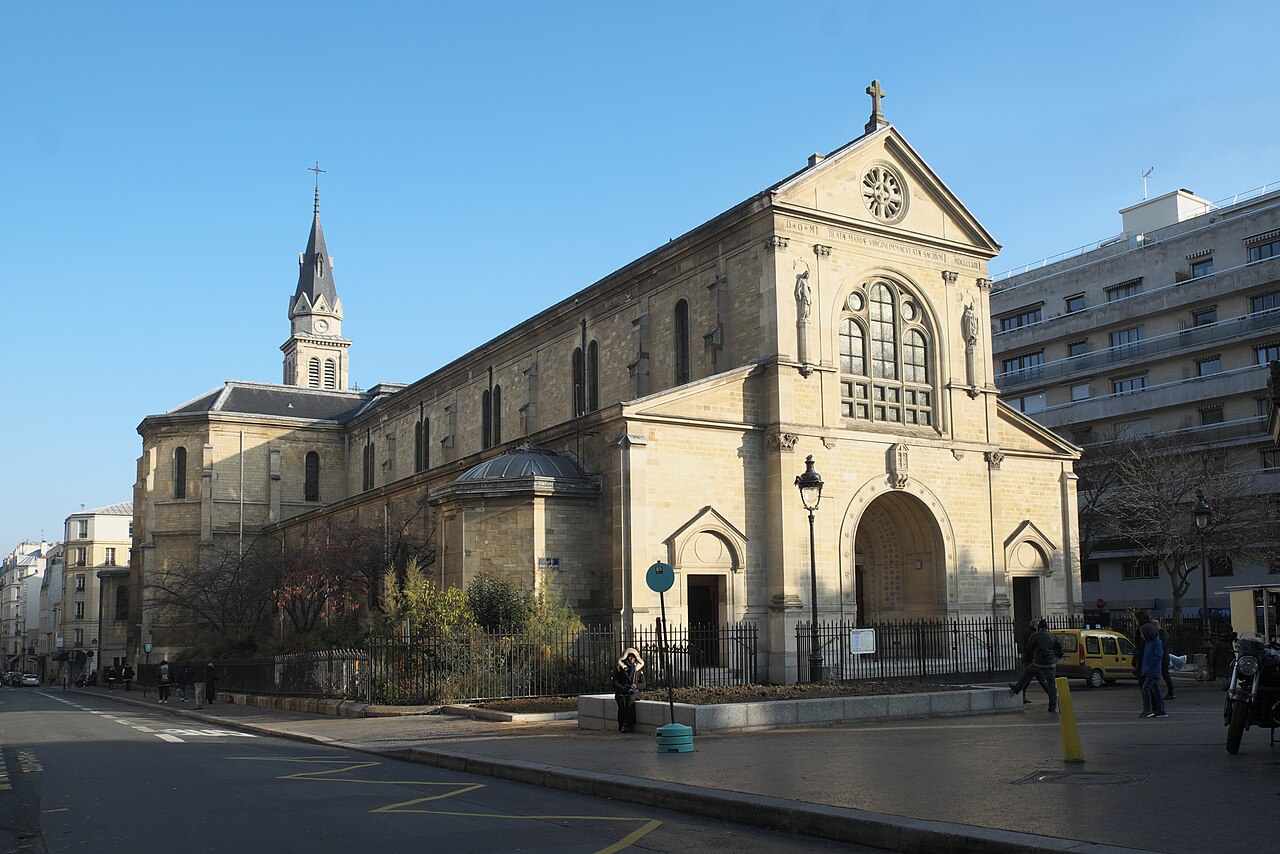
Beyond the Bustle: Discovering Notre-Dame de Clignancourt, Montmartre's Spiritual Anchor
Nestled at the foot of Montmartre's northern slope, amidst the vibrant tapestry of Paris's 18th arrondissement, stands a beacon of spiritual calm and architectural grandeur: the Notre Dame De Clignancourt. Its twin bell towers, a testament to neoclassical elegance, rise gracefully above the bustling streets, offering a striking contrast to the lively, bohemian energy of the neighborhood below. This isn't merely a church; it's a silent observer of history, a sanctuary for reflection, and a steadfast anchor for a community that has witnessed profound transformation over the centuries.
While many visitors flock to the Sacré-Cœur Basilica at the summit of Montmartre, Notre-Dame de Clignancourt offers a more intimate and equally enriching experience, embodying the spirit of 19th-century Parisian development and the enduring power of faith. It's a place where history, art, and daily life converge, inviting both parishioners and curious travelers to step away from the urban din and into a space of profound serenity.
A Neoclassical Gem Forged in a Time of Change
The story of Notre Dame De Clignancourt is intrinsically linked to the dramatic urbanization of Paris under Baron Haussmann in the mid-19th century. Built between 1859 and 1863, this magnificent structure emerged as Montmartre, once a rural village adorned with cherry orchards and vineyards, rapidly transformed into a burgeoning working-class district. Before its construction, residents of the then-annexed village of Clignancourt, which became part of Paris in 1860, had to ascend to the top of the Butte Montmartre to reach the small Église Saint-Pierre. The growing population and the industrial revolution brought a pressing need for a local parish church, a spiritual home closer to the daily lives of the artisans and laborers settling in the area.
Architect Paul-Eugène Lequeux was tasked with designing this crucial new landmark. His vision for Notre-Dame de Clignancourt masterfully blends classical elements with a modern layout, resulting in a design that is both grand and welcoming. The church's pale stone façade is a symphony of neoclassical precision, featuring prominent Corinthian columns that support elegant triangular pediments, evoking a sense of balance, strength, and timeless beauty. Above the main entrance, a graceful statue of the Virgin Mary, her arms outstretched, extends a warm welcome, symbolizing the church's dedication to the mother of Christ and its role as a spiritual protector.
Often described as Romanesque Revival in its overall style, the church's neoclassical details add a distinctive Parisian flair, making it a unique example of the era's architectural aspirations. It stands as a physical manifestation of Haussmann's vision for a modern, functional, yet aesthetically pleasing Paris, serving both practical and spiritual needs for its community.
Sanctuary of Serenity: Exploring the Interior of Notre-Dame de Clignancourt
Stepping inside Notre Dame De Clignancourt is akin to entering a different world, a peaceful counterpoint to the vibrant energy of the surrounding streets. The immediate sensation is one of openness and light, as high vaulted ceilings draw the eye upward, creating a sublime sense of spaciousness. The nave, lined with simple yet elegant columns, guides visitors towards the focal point: the altar.
The altar itself is a marvel of craftsmanship, adorned with intricate carvings and gilded details that catch the light. It features a striking depiction of the Virgin Mary, underscoring her central role in Catholic devotion and the church's namesake. Surrounding the interior, a blend of neoclassical and subtly Gothic-inspired elements contributes to an atmosphere of solemn beauty, inviting quiet contemplation. For a deeper dive into the artistic treasures within, consider reading Discover Notre-Dame de Clignancourt: Art, Stained Glass & Serenity in Paris, which explores these details in greater depth.
One of the church's most captivating features is its collection of stained-glass windows. Created by master artisans of the 19th century, these windows bathe the interior in a kaleidoscope of soft hues—blues, reds, and golds—that shift with the light. They depict biblical stories from the life of Christ and the Virgin, transforming divine narratives into vivid, luminous art. Each panel offers an opportunity for reflection, drawing the viewer into the spiritual significance of these timeless tales. Furthermore, the impressive organ, a masterpiece of craftsmanship in its own right, fills the sacred space with rich, resonant tones during services and special concerts, adding another layer to the sensory and spiritual experience.
The quiet atmosphere within provides a stark contrast to the lively Montmartre outside, making it an ideal place for reflection and connection to something timeless amidst the urban energy of Paris.
An Enduring Community Hub and Cultural Gem
From its inception, Notre Dame De Clignancourt was more than just a place of worship; it quickly became a vital spiritual anchor for the working-class residents of Montmartre, a neighborhood already renowned for its artistic and bohemian spirit. Over the decades, it has stood as a silent witness to the area's incredible transformation, from its humble beginnings as an agricultural hamlet to the dynamic, culturally rich part of Paris it is today. Its steadfast presence serves as a powerful reminder of the enduring role of faith, community, and tradition in the face of constant change.
Today, Notre-Dame de Clignancourt remains a vibrant, active parish. It hosts regular Masses, baptisms, weddings, and a variety of community events, continually strengthening the bonds of the diverse population it serves. Beyond its religious functions, the church has also embraced a significant role as a cultural hub. Its organ concerts and choral performances are highly regarded, drawing both local Parisians and international visitors who appreciate the exquisite acoustics and the chance to experience sublime music in a historic setting. These events underscore its continuing relevance not just as a spiritual center, but as a vital contributor to Montmartre's rich cultural life. To learn more about how this church has become an integral part of its neighborhood's story, explore Notre-Dame de Clignancourt: Montmartre's 19th-Century Parisian Gem.
Practical Tips for Your Visit:
- Location: Situated in the 18th arrondissement, it's easily accessible by Metro (Line 4, Simplon or Porte de Clignancourt; Line 12, Jules Joffrin).
- Best Time to Visit: To experience the church in quiet reflection, consider visiting outside of Mass times. Weekday mornings or early afternoons often offer the most serene atmosphere.
- Check for Events: If you're interested in organ concerts or choral performances, check the church's official website or local event listings in advance. These can be truly magical experiences.
- Combine Your Visit: Notre-Dame de Clignancourt is perfectly situated for exploration. After your visit, wander through the charming streets of Montmartre, discover local cafés, browse independent shops, and soak in the artistic ambiance of the neighborhood. It offers a moment of stillness and connection to the past, a unique contrast to the surrounding urban buzz.
A Timeless Invitation
The enduring presence of Notre Dame De Clignancourt amidst the ever-evolving Montmartre neighborhood highlights its timeless appeal. While the surrounding streets teem with life, brimming with cafés, boutiques, and vibrant street art, the Église Notre-Dame de Clignancourt offers a precious moment of stillness, a tangible connection to Paris's rich history, and a spiritual oasis. It is an architectural marvel, an artistic treasure chest, and most importantly, a living, breathing heart for its community. For anyone seeking to peel back the layers of Montmartre and discover its deeper spiritual and historical roots, a visit to Notre-Dame de Clignancourt is an absolutely essential and profoundly rewarding experience.